The Firns family: finding a miner in Bendigo’s rate books
A named family, an annual council record and a practical example of how one address can reconnect work, property and family life on a goldfield.
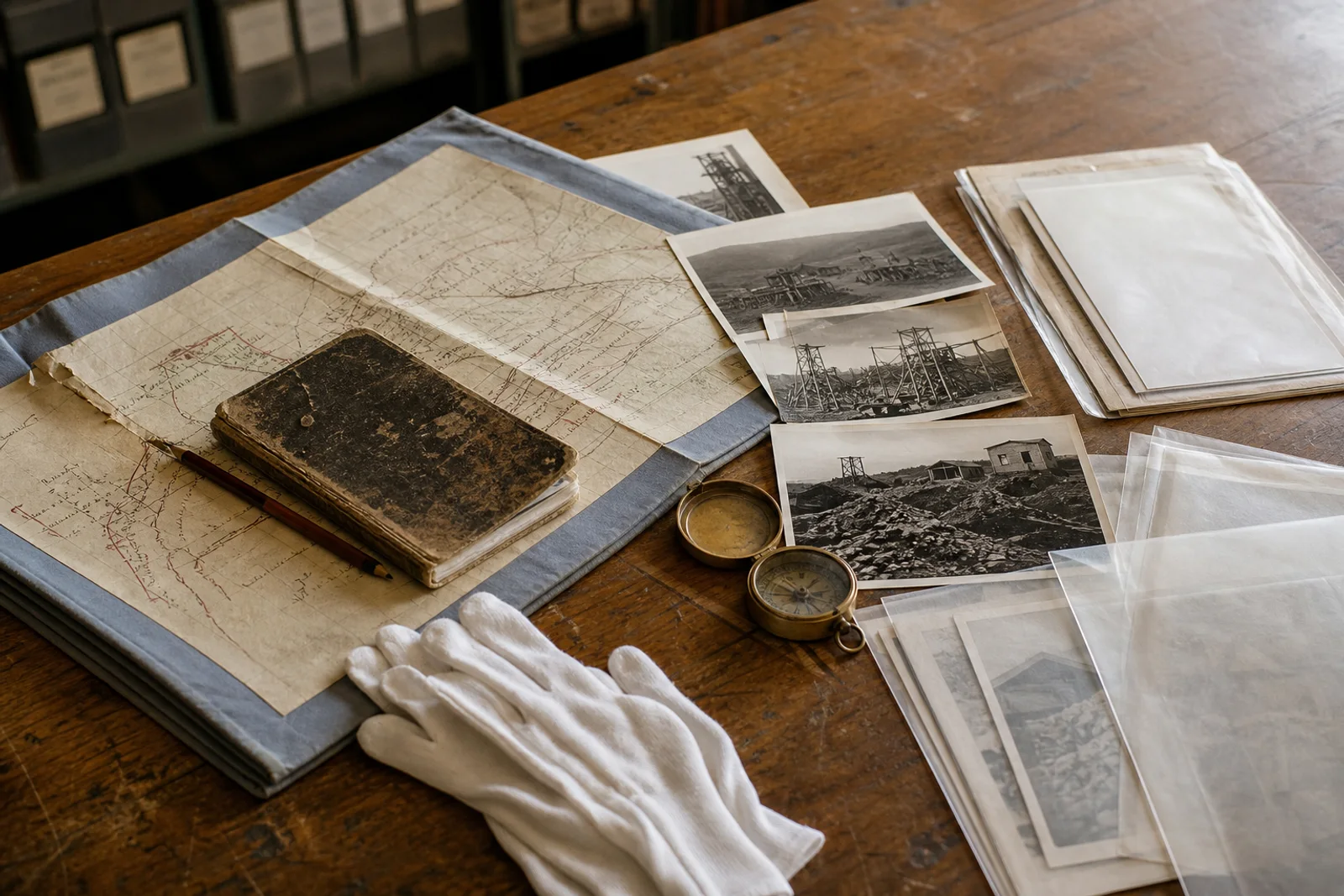
Public Record Office Victoria shows how Bendigo rate books place George Firns at New Chum in 1856 and record property, occupation and later family changes. The useful lesson is methodological: begin with a confirmed name and year, follow the same property through annual entries, then compare the result with newspapers, certificates and family photographs.
A family story hidden in a tax record
Council rate books were created to administer property, not to write family history. That is precisely why they can be so useful. Their repeated, administrative entries can place a named person at a property in a particular year and may record an occupation, owner, occupier, building, valuation or use. When the same property is followed year by year, a static name becomes a sequence.
A January 2026 Public Record Office Victoria article demonstrates the method through George Firns and his family. The article reports that the 1856 Bendigo rates place Firns, described as a miner, at New Chum. The entry included land, a dam, erections and puddling activity. Later records help trace other work and family milestones. Those details should be read from the cited records, not enlarged into a claim about the family’s wealth or success.
Why the address matters as much as the surname
Goldfield names move. A working name can become a neighbourhood; a street can be renamed; a household can be described by a reef, gully, allotment or ratepayer rather than a modern address. Searching only for a present-day street may miss the record. Keep the wording used in each source and build a place-name list alongside the family-name list.
For a family contributor, the most helpful first submission is often not a polished biography. It is a small evidence table: full name, spelling variants, approximate years, occupation, locality words, known relatives and the reference for the document already found. A photograph caption or address on an envelope may be the bridge that allows a rate-book entry to be distinguished from another person with the same name.
Follow the sequence, then test the story
Once a plausible rate entry is located, follow the property forward and backward. Note changes in owner, occupier, description and value without assuming why they happened. Then test the sequence against civil registration, probate, electoral rolls, directories, newspapers and relevant mining records. A council record can establish a place and administrative description; it cannot by itself prove a person’s underground role, an ownership interest in a mine or a family recollection about a discovery.
Trove can expose advertisements, notices and contemporary reporting, but optical-character-recognition errors make spelling variants essential. Save the newspaper title, date, page and stable link. If a family album supplies a conflicting date, retain both claims and label the conflict rather than making the less convenient version disappear.
What another family could add
A named photograph of New Chum, a cart, an account book, a rates notice or a letter that mentions a reef could sharpen this public trail. The contribution needs provenance: who holds it, how it came down through the family, what is written on it, and which identifications are certain or tentative. A scan without that context is visually interesting but much harder to use as evidence.
Mines & Quarries accepts a description before files. Contributors can request named credit, collection credit or anonymity. Nothing is presented as public proof until ownership, permission, privacy and the relationship between the private item and the public record have been reviewed.
Could your family add the missing line?
Do you recognise a Firns connection, a New Chum address, a wagon operator or a family photograph with names on the back?
Send a description, the source or catalogue reference you already have, and what you believe it changes. Nothing is automatically published. Do not send original physical material.
Share a note or source →Before you contribute
Do rate books prove someone owned a mine?
No. They can record property and occupation information, but mine ownership or title needs separate evidence.
What if the surname is misspelled?
Keep every variant and search by address, occupation, relatives and nearby entries as well as by surname.
Can I submit only a photograph caption?
Yes. A precise caption, the writing on the reverse and how the photograph came into the family can create a useful research lead.
Will a family story be published immediately?
No. Rights, privacy, provenance and the public-source trail are reviewed first.
- [1]Public Record Office Victoria — Researching Bendigo rate records: Firns family history
- [2]Public Record Office Victoria — Rate records
- [3]National Library of Australia — Trove newspapers and gazettes
- [4]National Archives of Australia — Caring for your personal collection
This article summarises public sources and identifies research gaps. It does not claim a relationship with the named families, repositories or interviewees, and it does not reproduce restricted collection material.