Western Australian mining records: MINEDEX, WAMEX and oral history
How to connect site and deposit records with open-file exploration reports, geochemistry, historic voices and a carefully bounded transaction trail.
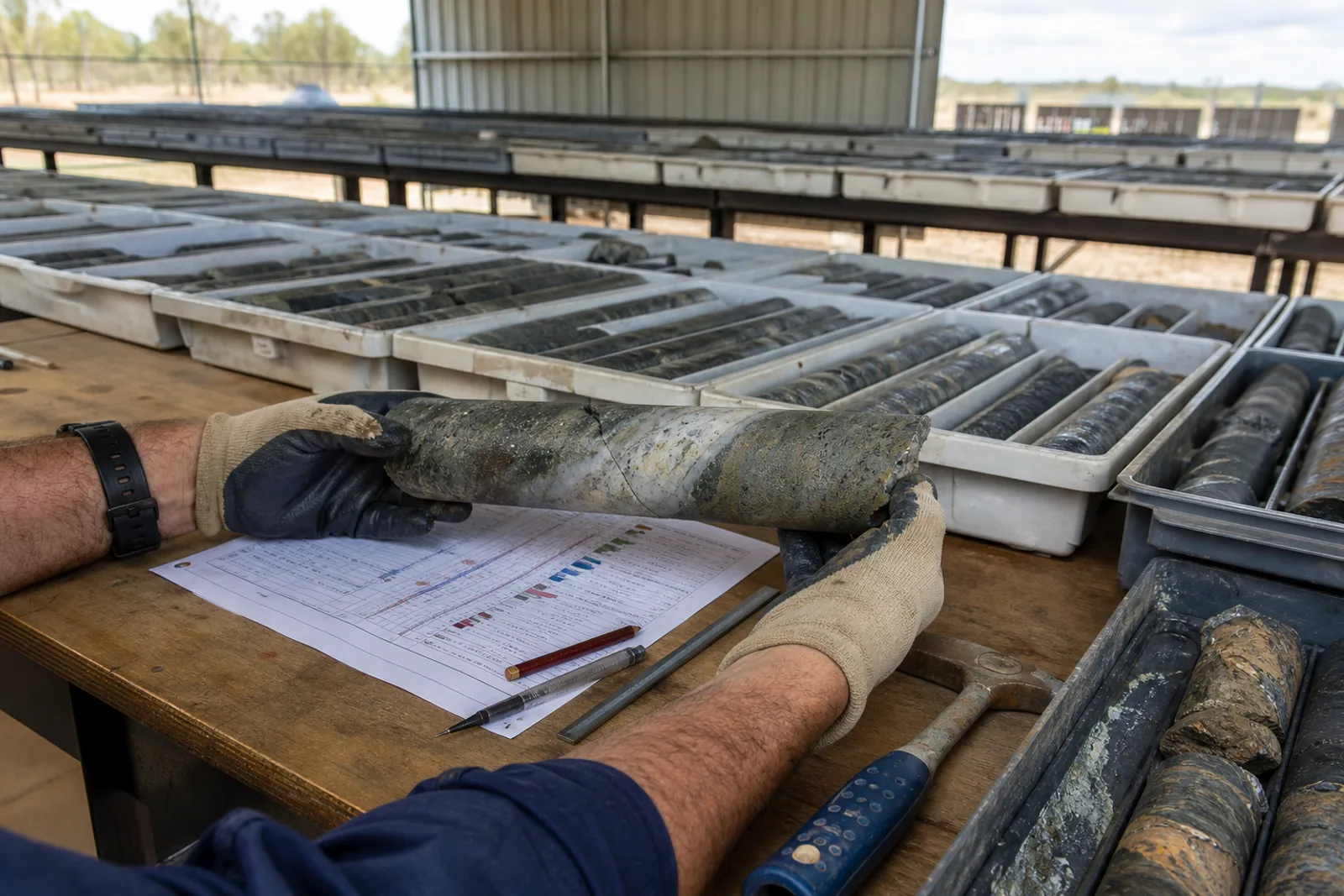
MINEDEX is the state’s mine, deposit and project database; WAMEX provides open-file company exploration reports after confidentiality rules allow release. State Library of Western Australia oral histories add family and working-life evidence that technical databases do not hold.
Use each system for the question it can answer.
A map, title summary, report, archive file and family recollection are different evidence classes. The sequence below preserves those differences so a lead does not become an unsupported fact.
- 01Mine, deposit and project database
MINEDEX ↗
What it holds. Mining and exploration sites and projects, operating status, location and state-recorded resource information.
Boundary. Use the current record and metadata. The public database is not a legal title register or a marketplace.
- 02Open-file report repository
WAMEX ↗
What it holds. Company exploration reports, drilling, samples and harmonised geochemistry released after confidentiality periods.
Boundary. Historical reports may pre-date current reporting codes. Release does not make every conclusion current or independently verified.
- 03Machine-readable service metadata
MINEDEX public WFS licence record ↗
What it holds. WFS access and the stated Creative Commons Attribution-NonCommercial 4.0 licence for the service.
Boundary. Non-commercial licence conditions constrain reuse. Mines & Quarries links to and summarises the source rather than treating it as unrestricted deal data.
- 04Oral-history collection
State Library of Western Australia oral histories ↗
What it holds. About 19,000 hours of recordings from more than 7,000 Western Australians, including mining and family life.
Boundary. Catalogue access, copyright and permitted use vary by item. Consent to archive is not blanket permission to republish.
From family note or map point to a cited record.
- 01Write the known facts. Exact source wording, name variants, place, date range, commodity or material, company and identifier.
- 02Locate, do not conclude. Use the spatial viewer to find the right district, layer and record ID. Save the layer name and access date.
- 03Open the underlying document. Follow title, report, plan or archive references. Record its creator, date, purpose and access conditions.
- 04Test aliases and chronology. Compare former company, mine, lease, field and locality names; do not merge nearby records by proximity alone.
- 05Separate present from past. Historical geology, production, ownership and sale events do not establish current status, value or rights.
- 06Add family context carefully. Label direct experience, family recollection and interpretation; document permission and the item’s provenance.
Geology is not a product sheet.
MINEDEX and WAMEX can orient a project or deposit search, but an occurrence, historical estimate or exploration result is not a current JORC disclosure, valuation, sale mandate or proof of title standing.
Use the Western Australia register for our published mine and quarry records, then return to the issuing authority for current decisions.
The public system can show the file. Families often explain the place.
A tenement number, old company, camp nickname, house photograph, inspector role, union paper or interview can reconnect the technical report to working life.
Using these records for an old sale or a possible listing
Public title, project and company records can help identify an asset and its history. They do not prove that an asset was legally transferred, is currently for sale, has a valid mandate or can be valued from public data. Historical sale pages require an express completion disclosure or remain labelled as publisher-reported. Current owners can register an asset confidentially, but Mines & Quarries does not market, negotiate or transact while the licensed brokerage gate remains closed.