Gwalia: family and working life beyond the famous mine
A Western Australian oral-history project preserves houses, occupations, migration, women’s work and underground life around Sons of Gwalia—and models the consent record every new interview needs.
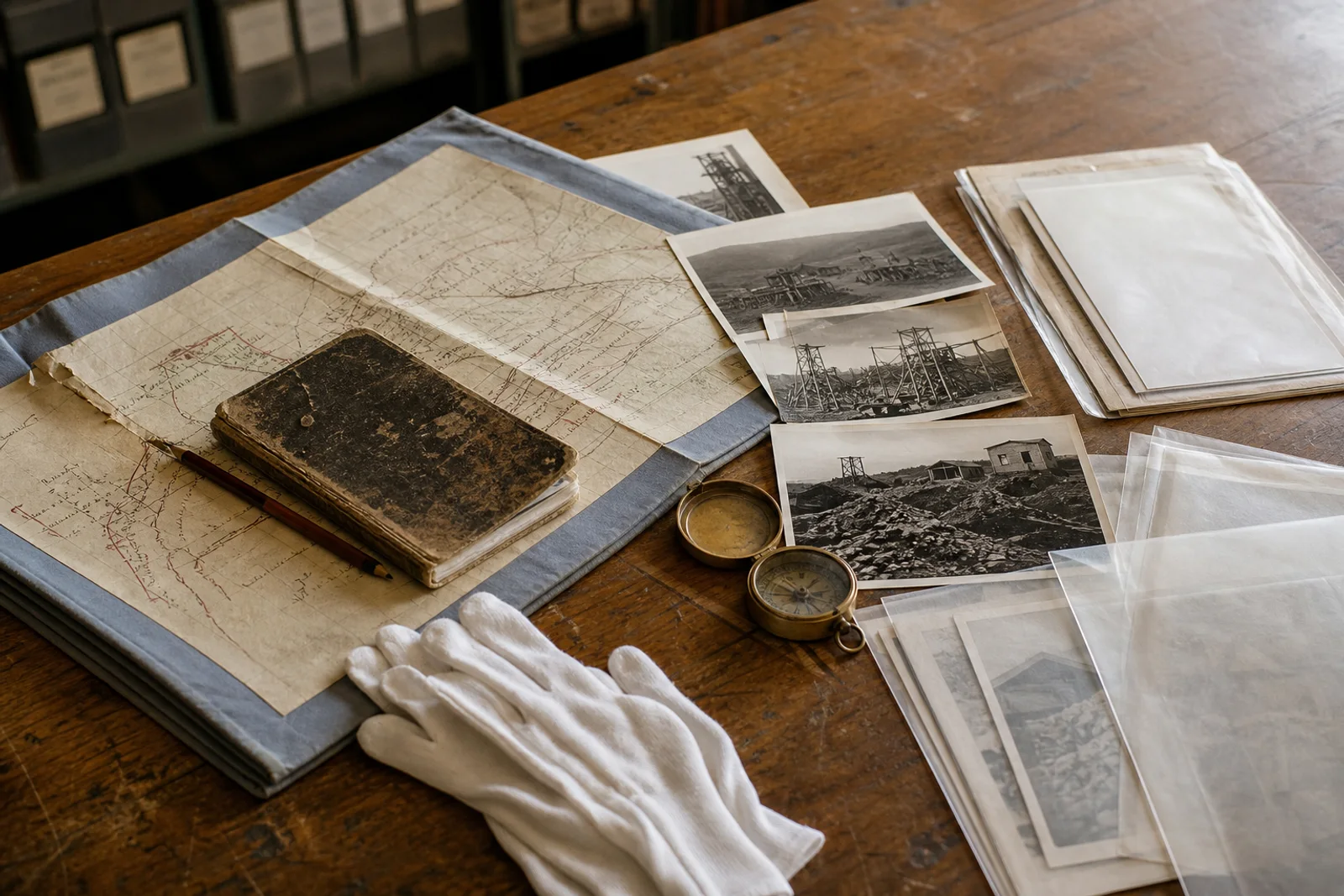
State Library of Western Australia records include the Gwalia Oral History Project, created as part of research into family and working life in the north-eastern goldfields. Transcripts identify interviewee, interviewer, date, project, consent discussion and family context. The archive shows why a mining history needs domestic life, migration, language, neighbourhoods and surface work as well as production.
The town is evidence, not background
Sons of Gwalia is easy to narrate through engineering, ownership and output. The oral-history archive changes the scale. Interviewees describe parents’ occupations, houses, neighbourhoods, work above and below ground, migration, shops, childhood and the social life around the mine. That evidence explains how an operation became a lived place.
The State Library catalogue and transcripts place the interviews within a research project on family and working life in Gwalia and Leonora. The transcripts identify interviewer, interviewee and date and begin with a discussion of rights and consent. Those details allow a reader to understand the conditions under which the testimony was recorded.
A house photograph can unlock several records
An interview may identify where a family lived and why it moved to Gwalia. A labelled house photograph can then be compared with town plans, rate or tenancy records, school records, directories and mine employment sources. The photograph does not need to show a headframe to be mining history; the relationship between house, work and town is the evidence.
Record both the family’s name for the place and the current or catalogue name. If a building survives, do not publish a private address or imply access. Historic identification should remain separate from present ownership and safety.
Preserve roles that company histories compress
Oral histories can retain the work of seamstresses, storekeepers, families, migrants, surface workers, inspectors and children alongside underground roles. They can also preserve language, humour and local terminology that a payroll or annual report cannot explain. That does not make recollection infallible; it makes it a distinct evidence class.
The State Library’s broader oral-history collection holds thousands of hours of Western Australian interviews across mining and other aspects of life. A new contribution should first be checked against existing catalogues so that it adds context, correction or a missing voice rather than unknowingly repeating an interview already preserved.
Turn a recollection into a research packet
After recording, extract a controlled list of names, places, organisations, dates and objects. Mark each as direct experience, family recollection or interviewer inference. Link confirmed public sources, then return the summary to the contributor for corrections and restrictions.
Mines & Quarries can receive a short description of a Gwalia connection and point it toward the locality file, the State Library collection and relevant government records. Originals stay with the owner unless a repository makes a separate agreement. Publication requires explicit rights and a documented evidence trail.
Could your family add the missing line?
Do you hold a Gwalia house photograph, work record, union paper, recipe, shop account, school name or story about the move after closure?
Send a description, the source or catalogue reference you already have, and what you believe it changes. Nothing is automatically published. Do not send original physical material.
Share a note or source →Before you contribute
Why include domestic and town life in mining history?
Operations depended on households, services and communities; those records explain how work was lived.
Can I quote an online transcript freely?
Not automatically. Check the catalogue’s copyright and use conditions and seek permission where required.
What should I record with a house photograph?
Names, approximate date, location wording, photographer if known, who identified it and how the image came into the collection.
What happens to an original item?
Mines & Quarries begins with a description. Ownership and any movement or copying must be separately agreed.
- [1]State Library of Western Australia — Mining and Energy WA collection items
- [2]State Library of Western Australia — Joan McCreed, Gwalia oral-history transcript
- [3]State Library of Western Australia — Betty Moor and Margo Hunter, Gwalia oral-history transcript
- [4]State Library of Western Australia — Oral histories
- [5]Oral History Australia — Guidelines for ethical practice
This article summarises public sources and identifies research gaps. It does not claim a relationship with the named families, repositories or interviewees, and it does not reproduce restricted collection material.