Tasmania: how to reconnect a worker’s name to a mine or district
A practical trail through the Tasmanian Names Index, directories, public archives and Mineral Resources Tasmania when a family knows a person but not the exact working.
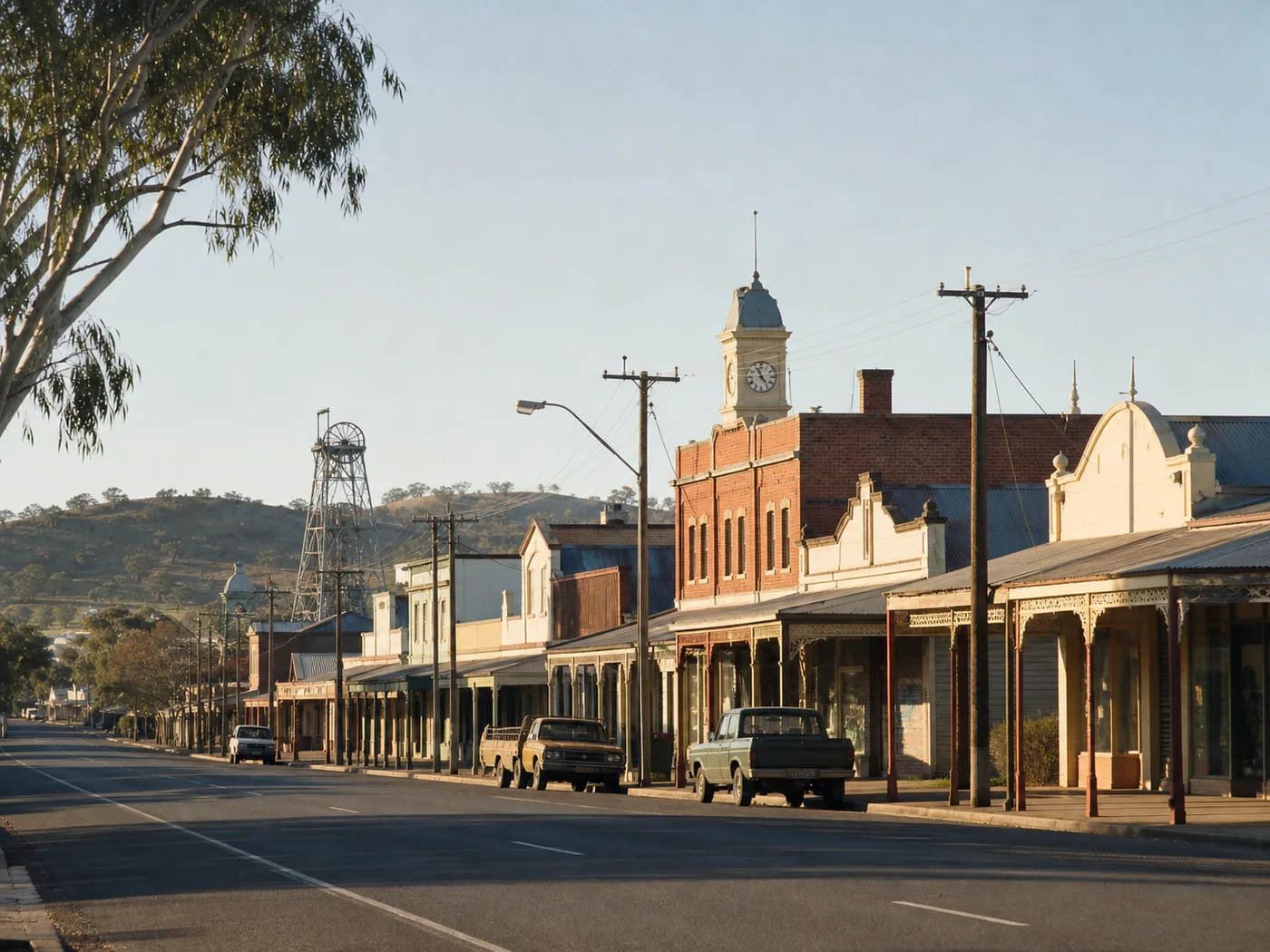
Libraries Tasmania provides name, family-history, residence and employment research pathways; Mineral Resources Tasmania provides historical reports, maps, photographs and a public geoscience library. Start with the person and a date range, identify the place, then search mine and company aliases. A mapped working alone does not prove employment.
Begin with the person, not a guessed mine
Family memory often retains a district—West Coast, Zeehan, Queenstown, Beaconsfield—or a company nickname rather than a formal working. Begin with the known person, spelling variants, approximate dates, relatives and where the family lived. Libraries Tasmania’s Names Index and family-history guides can lead into births, deaths, marriages, wills, inquests, directories and other records about people.
A directory or household record can place a person in a town, but it does not prove employment at the nearest mine. Preserve that distinction. Use the date and locality to create a shortlist of contemporary companies and workings, then look for a payroll, employment record, accident record, union source, newspaper report or family document that makes the connection.
Search by aliases and administrative geography
A mine may be indexed under a lease number, company, field, deposit, prospect or later project name. Town and district boundaries also change. Record every form found and do not merge them simply because they are close on a map. The report title, date and tenement reference are more reliable linking fields than a modern marketing name.
Mineral Resources Tasmania provides historical exploration-licence and mining-lease data and holds government and company reports extending back through the industry’s history. Its public library description notes publications from the 1880s, company exploration reports, maps, historical photographs and online access through the TIGER database. These are technical and administrative sources; they complement rather than replace the family record.
Let gaps remain visible
Not every employment record survives, and some current-tenement information remains confidential under legislation. A responsible family history can say that a person lived in a mining town and was described as a miner without assigning a specific employer. That bounded statement is still useful.
When two possible workings remain, create a comparison table: dates active, distance from the known address, company names, occupations required and the sources checked. A future contributor may recognise a manager, house, shift term or piece of equipment that breaks the tie.
Submit a question another person can answer
The most productive public invitation names the evidence and the gap: “William J. Brown, engine driver, Zeehan, 1908–1913; employer unknown; shown in this directory and family photograph.” It is safer and more answerable than publishing a speculative biography.
Contributors can send the catalogue link, directory reference or a description of the family item. Mines & Quarries records the confidence level, credits the source and keeps exact private locations and contact details out of the public page.
Could your family add the missing line?
Do you know a Tasmanian worker’s name, nickname, town or employer but not the mine? One pay slip, directory entry or labelled portrait may resolve the link.
Send a description, the source or catalogue reference you already have, and what you believe it changes. Nothing is automatically published. Do not send original physical material.
Share a note or source →Before you contribute
Does living in a mining town prove a person worked at a mine?
No. It is a lead that needs employment, newspaper, company, union or family evidence.
Where can I search Tasmanian names?
Libraries Tasmania’s Names Index is a practical starting point for many historical person records.
Where are old geological and company reports?
Mineral Resources Tasmania describes its library and TIGER database as access points for government and company material.
Can I submit an unresolved identity?
Yes. State the competing possibilities and the sources already checked.
- [1]Libraries Tasmania — Family history
- [2]Libraries Tasmania — Where someone lived
- [3]Mineral Resources Tasmania — Mineral tenement data
- [4]Mineral Resources Tasmania — Geoscience Library
- [5]Mineral Resources Tasmania — Frequently asked questions
This article summarises public sources and identifies research gaps. It does not claim a relationship with the named families, repositories or interviewees, and it does not reproduce restricted collection material.